

Warum (nicht nur) Rückenschmerzen oft im Bindegewebe stecken
von Tilo Mörgen, Dipl. Soziologe, Fachautor, Pohltherapeut
Viele von Ihnen kennen das frustrierende Gefühl: Der Rücken schmerzt seit Wochen oder Monaten, doch auf dem Röntgen- oder MRT-Bild ist entweder „nichts Genaues“ zu sehen oder die sichtbaren Verschleißerscheinungen passen schlichtweg nicht zu Ihren tatsächlichen Beschwerden (Schleip et al., 2026, S. 1) oder ihren zusätzlichen emotionalen Belastungen. Das ist kein Einzelfall – bei rund 85 bis 90 % aller Rückenschmerzen findet die klassische Bildgebung keine eindeutige knöcherne Ursache an Wirbeln oder Bandscheiben. Dazu gibt es nun zwei aktuelle Studien mit spannenden Ergebnissen - Overmann 2026, Schleip et al., 2026.
Die wichtigsten Ergebnisse auf einen Blick
- Die Faszie ist messbar verändert und verdickt
Bei Menschen mit chronischen Rückenschmerzen zeigte sich die Rückenfaszie im Ultraschall häufig deutlich verdickt (in Studien um rund 25 %) und wies eine veränderte Gewebestruktur auf (Schleip et al., 2026, S. 5 - vgl. auch Pavan, Stecco 2014 - Densifikation) - Eingeschränkte Gleitfähigkeit und „Verklebungen“
Faszien bestehen aus mehreren Schichten, die im Idealfall geschmeidig aneinander vorbeigleiten (Schleip et al., 2026, S. 1–2, 7). Bei Rückenschmerz-Patienten – besonders ausgeprägt bei akuten Schmerzen – war diese Beweglichkeit und Verformbarkeit der Schichten massiv herabgesetzt (Schleip et al., 2026, S. 7) - Faszientechniken zeigen messbare Wirkung
Erste Interventionsstudien belegen, dass gezielte manuelle Faszientechniken und Schabebehandlungen (Gua Sha) zu einer messbaren Reduktion der Fasziendicke und Muskelentspannung führen können (Schleip et al., 2026, S. 7–8). Alle manuellen Anwendungen erwiesen sich dabei als sicher und gut verträglich (Schleip et al., 2026, S. 8). - Faszientherapie chronische Rückenschmerzen und begleitende emotionale Belastungen
Die Faszientherapie lindert ebenso wie klassische Physiotherapie (Overmann 2026). Das gibt Ihnen als Patient der Praxis Bruckmann die beruhigende Sicherheit ein manualtherapeutische Methode aus dem pohltherapeutischen Methodenmix bzw. im Rahmen der Beckentherapie Bruckmann zu erhalten, die entlastet.
 evidenzbasierten Techniken Faszienbehandlung - Praxis Bruckmann 2026Overmann zeigt in Ihrer Studie eindrucksvoll, wie eng chronische Rückenschmerzen, körperliche Spannungen und emotionale Erschöpfung zusammenhängen (myofasziales Schmerzsyndrom). Sowohl faszienfokussierte Ansätze als auch klassische, aktive Bewegungstherapien über sechs Wochen hinweg führten zu einer deutlichen Schmerzlinderung, gesteigerter Beweglichkeit und einer spürbaren Aufhellung der Stimmung. Genau hier schlägt sich die Brücke zur manualtherapeutischen Arbeit in unserer Praxis Bruckmann und unserer kostenlosen APP GESUNDMOVE: Das fasziale Bindegewebe und die Muskulatur bilden ein sensibel vernetztes System, das Schmerzen und Stress gleichermaßen speichert. Die Studienergebnisse bestätigen, wie wirkungsvoll die gezielte Arbeit an Muskeln und Faszien (wie wir sie u. a. mit der Pohltherapie® praktizieren) in Kombination mit geführter Bewegung und geschulter Körperwahrnehmung ist: Indem verklebte Gewebeschichten gelöst und chronische Haltemuster abgebaut werden, lässt sich der Teufelskreis aus Schmerz, Bewegungseinschränkung und emotionaler Erschöpfung nachhaltig durchbrechen (Overmann 2026).
Darüberhinaus liefert die zweite aktuelle wissenschaftliche Übersichtsarbeit im renommierten European Spine Journal wichtige Erklärungen faszialer Manipulationsmöäglichkeiten und rückt die große Rückenfaszie in den Fokus, welche in unserer Praxis seit jeher eine zentrale Rolle spielt. (Thorakolumbalfaszie) (Schleip et al., 2026, S. 1–2).
Besonders freut uns: Als Mitautorin dieser hochkarätigen Studie zeichnen sich Dr. Lea Overmann (Schleip et al., 2026, S. 1, 12) , wie auch Dr. Andreas Brandl mitverantworltich, die wir bereits 2025 in unserem Podcast „Faszienierend“ ausführlich interviewen durften!
Was wurde in der neuen Studie untersucht?
Schleip, Overmann, Brandl und das Forschungsteam haben 14 Studien mit insgesamt rund 880 Teilnehmerinnen und Teilnehmern systematisch zusammengefasst und ausgewertet (Schleip et al., 2026, S. 1, 5). Untersucht wurde, wie sich die Rückenfaszie von Menschen mit Rückenschmerzen im Vergleich zu gesunden Personen bei modernen Ultraschall- und Elastographie-Messungen verhält (Schleip et al., 2026, S. 1, 3):
- Gewebe-Dicke und Struktur: Wie dick ist die Faszie und wie gleichmäßig ist sie aufgebaut (Schleip et al., 2026, S. 3, 5)?
- Gleitfähigkeit und Beweglichkeit (Shear Strain): Können die einzelnen Bindegewebsschichten bei Rumpfbewegungen reibungsarm aneinander vorbeigleiten (Schleip et al., 2026, S. 3, 7)?
- Festigkeit und Steifigkeit (Stiffness): Wie elastisch oder verhärtet ist das fasziale Gewebe (Schleip et al., 2026, S. 3, 7)
Reaktion auf Behandlungen: Verändern sich diese Messwerte nach manuellen und faszialen Therapien (Schleip et al., 2026, S. 3, 7–8)?
Alternative Schmerzbehandlung in der Praxis Bruckmann?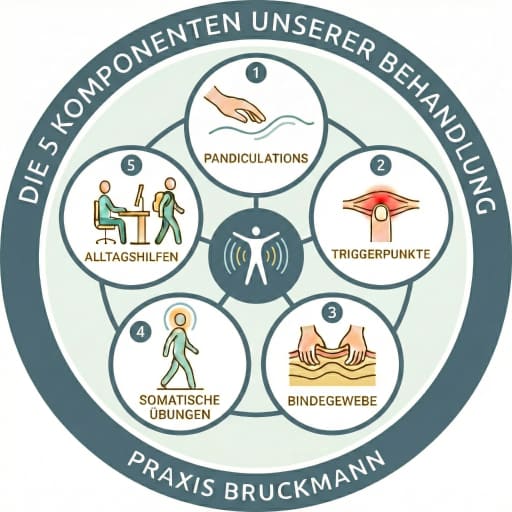
Die Ergebnisse der Übersichtsarbeit bestätigen das Konzept, das wir in der Praxis Bruckmann tagtäglich leben und vermitteln:
- Der Rücken ist mehr als nur Wirbel und Bandscheiben: Die Rückenfaszie ist dicht mit sensiblen Nervenendigungen und Schmerzrezeptoren durchzogen (Schleip et al., 2026, S. 1–2). Veränderungen in diesem Netzwerk können direkte Schmerzursacher sein (Schleip et al., 2026, S. 1–2).
- Gezielte Entlastung und Gleitfähigkeit: Unsere therapeutischen Ansätze – von manuellen Faszientechniken über gezielte Druck- und Zugreize bis hin zu funktionellen Bewegungsübungen – setzen genau dort an, wo das Bindegewebe verklebt, verdickt oder in seiner Gleitfunktion gestört ist (Schleip et al., 2026, S. 7–8, 10–11).
- Ganzheitliche Bewegung: Faszien brauchen vielseitige Bewegungsimpulse, Dehnung und Entlastung, um elastisch, durchfeuchtet und schmerzfrei zu bleiben (Schleip et al., 2026, S. 10–11).
In der kostenlosen APP GESUNDMOVE (Apple, Android oder WEB-APP) finden Sie das komplette Rückenprogramm (VIDEO) aus unserem Buch und zahlreiche weitere Infos und Übungstipps.
Wo gibt es noch offene Fragen?
So vielversprechend die Ultraschall-Forschung ist: Die Wissenschaft steht hier vor spannenden nächsten Schritten, wie das Autorenteam um Schleip betont (Schleip et al., 2026, S. 8, 10–12):
- Ursache oder Folge? Es ist noch nicht abschließend geklärt, ob die Faszie zuerst verklebt und den Schmerz auslöst oder ob Schonhaltungen und Schmerzen dazu führen, dass das Gewebe verdickt (Schleip et al., 2026, S. 8, 10, 12).
- Individuelle Unterschiede: Je nach Messmethode zeigen manche Patienten verhärtete, andere dagegen übermäßig lockere Faszienstrukturen (Schleip et al., 2026, S. 7, 10–11). Es gibt also nicht das „eine“ starre Faszienschema für alle (Schleip et al., 2026, S. 11–12).
- Langzeitwirkung: Wie lange die positiven Veränderungen im Ultraschallbild nach einer Faszientherapie anhalten, soll in künftigen Langzeitstudien noch genauer untersucht werden (Schleip et al., 2026, S. 8, 11–12).
Fazit Faszien & Podcast-Tipp
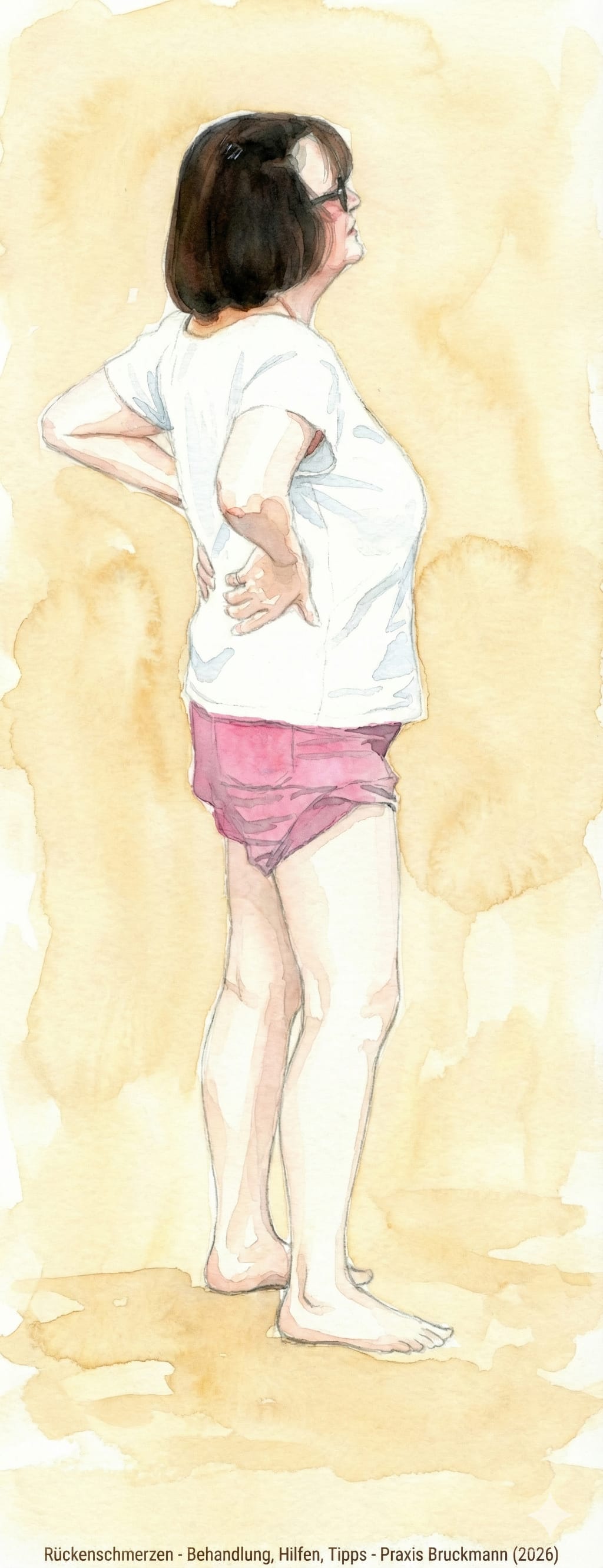
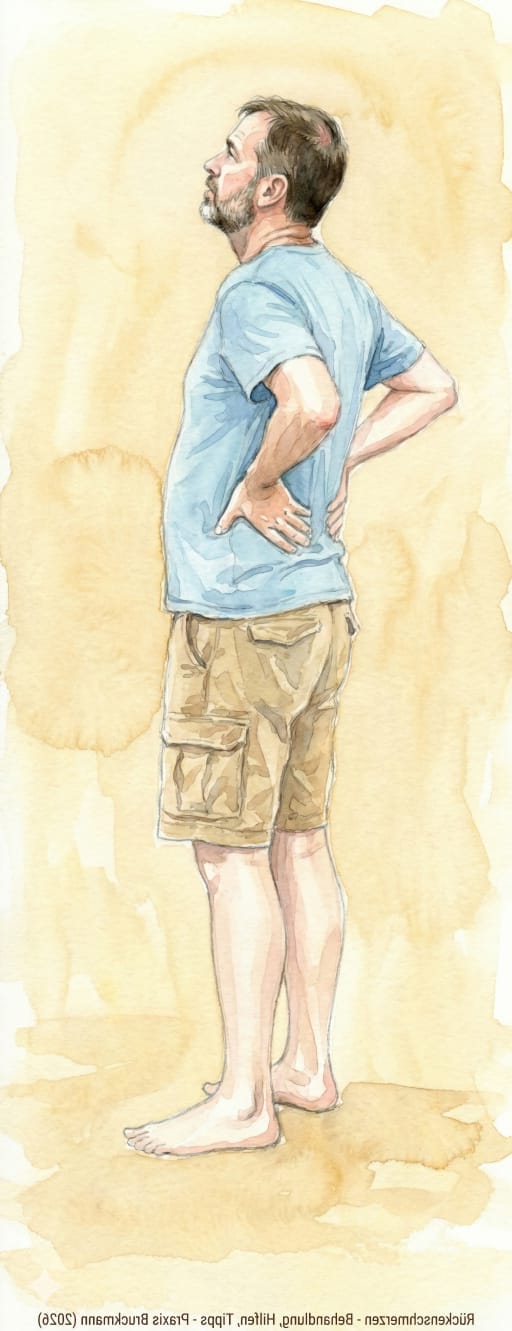 Die Forschung beweist: Das Bindegewebe verdient volle Aufmerksamkeit bei Rückenschmerzen (Schleip et al., 2026, S. 1, 12).
Wenn Sie tiefer in die faszinierende Welt des Bindegewebes eintauchen möchten, hören Sie gerne noch einmal in unsere Podcast-Folge von „Faszinierend“ aus 2025 mit Dr. Lea Overmann oder hören Sie Dr. Andreas Brandl hinein! Lebendige Forschung.
Haben Sie Fragen zu Ihren Beschwerden oder möchten Sie wissen, wie wir Ihre Faszien gezielt unterstützen können? Sprechen Sie uns bei Ihrem nächsten Besuch in der Praxis Bruckmann gerne an oder buchen Sie Online einen Termin oder eine Beratung..
T. Mörgen - Praxis Bruckmann
Vollständige wissenschaftliche Quellenangabe
Schleip, R., Overmann, L., Müller, M., Warneke, K., Siegel, S. D., Bartsch, K., Pohl, T., Bensamoun, S., Haiat, G., & Brandl, A. (2026). Thoracolumbar fascia ultrasound and elastography biomarkers in low back pain: a systematic review of associations and responsiveness to intervention. European Spine Journal. https://doi.org/10.1007/s00586-026-10298-4
Overmann L, Steinmeier K, Brandl A, Egner C, Kreutzer A, Gadea de Reckel S, Floroiu PS, Zimmermann S, Stühn D, Geiß H, Kleeberg A, Schleip R. Fascia-Focused Versus Conventional Physiotherapy for Chronic Low Back Pain and Comorbid Depression in Psychosomatic Inpatients. J Clin Med. 2026 May 11;15(10):3698. doi: 10.3390/jcm15103698. PMID: 42194661; PMCID: PMC13207669.
Pavan, P. G., Stecco, A., Stern, R., & Stecco, C. (2014). Painful connections: densification versus fibrosis of fascia.Current Pain and Headache Reports, 18(8), 441.
Verwendete wissenschaftliche Literatur (evidente Faszienbehandlung)
Barker, P. J., & Briggs, C. A. (1999). Attachments of the posterior layer of lumbar fascia. Spine, 24(17), 1757–1764. https://doi.org/10.1097/00007632-199909010-00004
Barker, P. J., Urquhart, D. M., Story, I. H., Fahrer, M., & Briggs, C. A. (2007). The middle layer of lumbar fascia and attachments to lumbar transverse processes: Implications for segmental control and fracture. European Spine Journal, 16(12), 2232–2237. https://doi.org/10.1007/s00586-007-0502-z
Barnes, M. F. (1997). The basic science of myofascial release: Morphologic change in connective tissue. Journal of Bodywork and Movement Therapies, 1(4), 231–238. https://doi.org/10.1016/S1360-8592(97)80051-4
Bishop, M. D., Bialosky, J. E., & Cleland, J. A. (2011). Patient expectations of benefit from common interventions for low back pain and effects on outcome. Journal of Manual & Manipulative Therapy, 19(1), 20–25. https://doi.org/10.1179/106698110X12804993427003
Bojairami, I., & Driscoll, M. (2022). Coordination between trunk muscles, thoracolumbar fascia, and intra-abdominal pressure toward static spine stability. Spine, 47(9), E423–E431. https://doi.org/10.1097/BRS.0000000000004223
Brandl, A., Egner, C., Reer, R., Schmidt, T., & Schleip, R. (2023). Immediate effects of myofascial release treatment on lumbar microcirculation: A randomized, placebo-controlled trial. Journal of Clinical Medicine, 12(4), Article 1248. https://doi.org/10.3390/jcm12041248
Brandl, A., Engel, R., Egner, C., Schleip, R., & Schubert, C. (2024). Relations between daily stressful events, exertion, heart rate variability, and thoracolumbar fascia deformability: A case report. Journal of Medical Case Reports, 18(1), Article 589. https://doi.org/10.1186/s13256-024-04935-z
Brandl, A., Overmann, L., Schleip, R., & Helmrich, C. (in review). Stress-induced changes in autonomic activity and fascia hydration: A cross-recurrence quantification analysis in a naturalistic exam paradigm. Journal of Clinical Medicine.
Brandl, A., & Schleip, R. (2025). The in vitro and vivo validation of a new ultrasound method to quantify thoracolumbar fascia deformation. Journal of Clinical Medicine, 14(5), Article 1736. https://doi.org/10.3390/jcm14051736
Brandl, A., Wilke, J., Egner, C., Reer, R., Schmidt, T., & Schleip, R. (2023). Thoracolumbar fascia deformation during deadlifting and trunk extension in individuals with and without back pain. Frontiers in Medicine, 10, Article 1177146. https://doi.org/10.3389/fmed.2023.1177146
Brandl, A., Wilke, J., Egner, C., Schmidt, T., & Schleip, R. (2023). Effects of maximal eccentric trunk extensor exercise on lumbar extramuscular connective tissue: A matched-pairs ultrasound study. Journal of Sports Science & Medicine, 22(3), 446–453. https://doi.org/10.52082/jssm.2023.446
Brandl, A., Wilke, J., Egner, C., Schmidt, T., Schilder, A., & Schleip, R. (2024). Pain quality patterns in delayed onset muscle soreness of the lower back suggest sensitization of fascia rather than muscle afferents: A secondary analysis study. Pflügers Archiv - European Journal of Physiology, 476, 395–405. https://doi.org/10.1007/s00424-023-02888-5
Brinjikji, V., Luetmer, P. H., Comstock, B., Bresnahan, B. W., Chen, L. E., Deyo, R. A., Halabi, S., Turner, J. A., Avins, A. L., James, K., Wald, J. T., Kallmes, D. F., & Jarvik, J. G. (2015). Systematic literature review of imaging features of spinal degeneration in asymptomatic populations. American Journal of Neuroradiology, 36(4), 811–816. https://doi.org/10.3174/ajnr.A4173
Bush, H. M., Bruehl, S., & Carlson, C. R. (2021). The role of autonomic dysregulation in post-exercise musculoskeletal pain models. European Journal of Pain, 25(4), 789–801. https://doi.org/10.1002/ejp.1712
Cheung, K., Hume, P. A., & Maxwell, L. (2003). Delayed onset muscle soreness: Treatment strategies and performance factors. Sports Medicine, 33(2), 145–164. https://doi.org/10.2165/00007256-200333020-00005
Close, G. L., Ashton, T., Cable, T., Doran, D., & MacLaren, D. P. M. (2004). Eccentric exercise, isokinetic muscle torque and delayed onset muscle soreness: The role of reactive oxygen species. European Journal of Applied Physiology, 91(5), 615–621. https://doi.org/10.1007/s00421-003-1012-2
Creze, M., Soubeyrand, M., & Gagey, O. (2019). The paraspinal muscle-tendon system: Its paradoxical anatomy. PLOS ONE, 14(4), Article e0214812. https://doi.org/10.1371/journal.pone.0214812
De Coninck, K., Hambly, K., Dickinson, A. W., & Passfield, L. (2018). Measuring the morphological characteristics of thoracolumbar fascia in ultrasound images: An inter-rater reliability study. BMC Musculoskeletal Disorders, 19(1), Article 180. https://doi.org/10.1186/s12891-018-2104-5
Donohue, G. F., Meredith, P. J., Strong, J., Page, L., & Andrews, N. E. (2026). The association between partner reactions to chronic pain and pain-related outcomes: A systematic review. European Journal of Pain, 30(3), Article e70236. https://doi.org/10.1002/ejp.70236
Ezzatvar, Y., Dueñas, L., Balasch-Bernat, M., Lluch-Girbés, E., & Rossettini, G. (2024). Which portion of physiotherapy treatments' effect is not attributable to the specific effects in people with musculoskeletal pain? A meta-analysis of randomized placebo-controlled trials. Journal of Orthopaedic & Sports Physical Therapy, 54(6), 391–399. https://doi.org/10.2519/jospt.2024.12126
Fede, C., Clair, C., Pirri, C., Petrelli, L., Zhao, X., Sun, Y., Macchi, V., & Stecco, C. (2024). The superficial fascia: A narrative review. Preprints, Article 2024122103. https://doi.org/10.20944/preprints202412.2103.v1
Fede, C., Petrelli, L., Pirri, C., Neuhuber, W., Tiengo, C., Biz, C., De Caro, R., Schleip, R., & Stecco, C. (2022). Innervation of human superficial fascia. Frontiers in Neuroanatomy, 16, Article 981426. https://doi.org/10.3389/fnana.2022.981426
Fridén, J., Sjöström, M., & Ekblom, B. (1981). A morphological study of delayed muscle soreness. Experientia, 37(5), 506–507. https://doi.org/10.1007/BF01986165
GBD 2021 Low Back Pain Collaborators. (2023). Global, regional, and national burden of low back pain, 1990–2020, its attributable risk factors, and projections to 2050: A systematic analysis of the Global Burden of Disease Study 2021. The Lancet Rheumatology, 5(6), e316–e329. https://doi.org/10.1016/S2665-9913(23)00098-X
Gibson, W., Arendt-Nielsen, L., & Graven-Nielsen, T. (2009). Delayed onset muscle soreness at the tendon-bone junction and muscle tissue. European Journal of Pain, 13(5), 470–476. https://doi.org/10.1016/j.ejpain.2008.06.002
Gleeson, M., Blannin, A. K., Walsh, N. P., Field, C. N. E., & Pritchard, J. C. (1998). Effect of exercise-induced muscle damage on the blood lactate response to incremental exercise in humans. European Journal of Applied Physiology, 77(3), 292–295. https://doi.org/10.1007/s004210050336
Hinz, B., Phan, S. H., Thannickal, V. J., Prunotto, M., Desmoulière, A., Varga, J., De Wever, O., Mareel, M., & Gabbiani, G. (2012). Recent developments in myofibroblast biology: Paradigms for connective tissue remodeling. The American Journal of Pathology, 180(4), 1340–1355. https://doi.org/10.1016/j.ajpath.2012.02.001
Huijing, P. A. (2009). Epimuscular myofascial force transmission: A historical review and implications for new research. Journal of Biomechanics, 42(1), 9–21. https://doi.org/10.1016/j.jbiomech.2008.09.027
Ivanov, P. C. (2021). The new field of network physiology: Building the dictionary of organ system interactions. Frontiers in Network Physiology, 1, Article 634006. https://doi.org/10.3389/fnetp.2021.634006
Karayannis, N. V., Baumann, I., Sturgeon, J. A., Melloh, M., & Mackey, S. C. (2019). The impact of social isolation on pain interference: A longitudinal study. Annals of Behavioral Medicine, 53(1), 65–74. https://doi.org/10.1093/abm/kay017
Keriven, H., Sierra, A. S., González-de-la-Flor, Á., Arrabé, M. G., de la Plaza San Frutos, M., Maestro, A. L., Guillermo-Garcia-Perez-de-Sevilla, Aguilera, J. F. T., Suarez, V. J. C., & Balmaseda, D. D. (2025). Influence of combined transcranial and peripheral electromagnetic stimulation on the autonomous nerve system on delayed onset muscle soreness in young athletes: A randomized clinical trial. Journal of Translational Medicine, 23(1), Article 306. https://doi.org/10.1186/s12967-025-06238-3
Kiecolt-Glaser, J. K., Loving, T. J., Stowell, J. R., Malarkey, W. B., Lemeshow, S., Dickinson, S. L., & Glaser, R. (200...source4. https://doi.org/10.1001/archpsyc.62.12.1377
Langevin, H. M., Fox, J. R., Koptiuch, C., Badger, G. J., Greenan-Naumann, A. C., Bouffard, N. A., Krag, M. H., Sears, J., & Henry, S. M. (2011). Reduced thoracolumbar fascia shear strain in human chronic low back pain. BMC Musculoskeletal Disorders, 12, Article 203. https://doi.org/10.1186/1471-2474-12-203
Langmár, G., Sümegi, T., Fülöp, B., Pozsgai, L., Mocsai, T., Tóth, M., Racz, L., Kopper, B., Dér, A., & Búzás, A. (2025). HRV alterations during delayed-onset muscle soreness inducing exercise with Piezo2 interpretation. Preprints, Article 2025061739. https://doi.org/10.20944/preprints202506.1739.v1
Lau, W. Y., Blazevich, A. J., Newton, M. J., Wu, S. S. X., & Nosaka, K. (2015). Assessment of muscle pain induced by elbow-flexor eccentric exercise. Journal of Athletic Training, 50(11), 1140–1148. https://doi.org/10.4085/1062-6050-50.11.05
Makyeyeva, L., Belenichev, I., Aliyeva, O., Frolov, O., Petakh, P., & Kamyshnyi, O. (2025). Impact of chronic social stress on molecular markers of skin regeneration during experimental excisional wounding. Frontiers in Immunology, 16, Article 1656214. https://doi.org/10.3389/fimmu.2025.1656214
Maspers, M., Ekelund, U., Björnberg, J., & Mellander, S. (1991). Protective role of sympathetic nerve activity to exercising skeletal muscle in the regulation of capillary pressure and fluid filtration. Acta Physiologica Scandinavica, 141(3), 351–361. https://doi.org/10.1111/j.1748-1716.1991.tb09091.x
Mavropalias, G., Calapre, L., Morici, M., Koeda, T., Poon, W. C. K., Barley, O. R., Gray, E., Blazevich, A. J., & Nosaka, K. (2021). Changes in plasma hydroxyproline and plasma cell-free DNA concentrations after higher- versus lower-intensity eccentric cycling. European Journal of Applied Physiology, 121(4), 1087–1097. https://doi.org/10.1007/s00421-020-04593-1
McEwen, B. S. (2006). Protective and damaging effects of stress mediators: Central role of the brain. Dialogues in Clinical Neuroscience, 8(4), 367–381. https://doi.org/10.31887/DCNS.2006.8.4/bmcewen
Mense, S. (2019). Innervation of the thoracolumbar fascia. European Journal of Translational Myology, 29(3), 151–158. https://doi.org/10.4081/ejtm.2019.8297
Michalak, J., Aranmolate, L., Bonn, A., Grandin, K., Schleip, R., Schmiedtke, J., Quassowsky, S., & Teismann, T. (2022). Myofascial tissue and depression. Cognitive Therapy and Research, 46(3), 560–572. https://doi.org/10.1007/s10608-021-10282-w
Müller, M., Schleip, R., Michalak, J., Klein, T., & Brandl, A. (2022). Does myofascial stiffness promote depressive symptoms? Short-term effects of various fascial training programs on muscle stiffness and affective disorders. Vortragspräsentation & Arbeitspapier, Universität Witten/Herdecke & TU München.
Nosaka, K., Newton, M., & Sacco, P. (2002). Delayed-onset muscle soreness does not reflect the magnitude of eccentric exercise-induced muscle damage. Scandinavian Journal of Medicine & Science in Sports, 12(6), 337–346. https://doi.org/10.1034/j.1600-0838.2002.10178.x
Pyter, L. M., Yang, L., da Rocha, J. M., & Engeland, C. G. (2014). The effects of social isolation on wound healing mechanisms in female mice. Physiology & Behavior, 127, 64–70. https://doi.org/10.1016/j.physbeh.2014.01.008
Raastad, T., Owe, S. G., Paulsen, G., Enns, D., Overgaard, K., Crameri, R., Kiil, S., Belcastro, A., Bergersen, L., & Hallén, J. (2010). Changes in calpain activity, muscle structure, and function after eccentric exercise. Medicine & Science in Sports & Exercise, 42(1), 86–95. https://doi.org/10.1249/MSS.0b013e3181ac7afa
Rossettini, G., Colombi, A., Carlino, E., Manoni, M., Mirandola, M., Polli, A., Turolla, A., & Testa, M. (2024). Boosting treatment outcomes via the patient-practitioner relationship, treatment beliefs, or therapeutic setting: A systematic review with meta-analysis of contextual effects in chronic musculoskeletal pain. Journal of Orthopaedic & Sports Physical Therapy, 54(7), 440–456. https://doi.org/10.2519/jospt.2024.12259
Schilder, A., Hoheisel, U., Magerl, W., Benrath, J., Klein, T., & Treede, R.-D. (2014). Sensory findings after stimulation of the thoracolumbar fascia with hypertonic saline suggest its contribution to low back pain. PAIN, 155(2), 222–231. https://doi.org/10.1016/j.pain.2013.09.025
Schilder, A., Magerl, W., Hoheisel, U., Klein, T., & Treede, R.-D. (2016). Electrical high-frequency stimulation of the human thoracolumbar fascia evokes long-term potentiation-like pain amplification. PAIN, 157(10), 2309–2317. https://doi.org/10.1097/j.pain.0000000000000649
Schilder, A., Magerl, W., Klein, T., & Treede, R.-D. (2018). Assessment of pain quality reveals distinct differences between nociceptive innervation of low back fascia and muscle in humans. PAIN Reports, 3(3), Article e662. https://doi.org/10.1097/PR9.0000000000000662
Schleip, R., Duerselen, L., Vleeming, A., Naylor, I. L., Lehmann-Horn, F., Zorn, A., Jaeger, H., & Klingler, W. (2012). Strain hardening of fascia: Static stretching of dense fibrous connective tissues can induce a temporary stiffness increase accompanied by enhanced matrix hydration. Journal of Bodywork and Movement Therapies, 16(1), 94–100. https://doi.org/10.1016/j.jbmt.2011.09.003
Schleip, R., Gabbiani, G., Wilke, J., Naylor, I., Hinz, B., Zorn, A., Jäger, H., Breul, R., Schreiner, S., & Klingler, W. (2019). Fascia is able to actively contract and may thereby influence musculoskeletal dynamics: A histochemical and mechanographic investigation. Frontiers in Physiology, 10, Article 336. https://doi.org/10.3389/fphys.2019.00336
Schubert, C., Geser, W., Noisternig, B., Fuchs, D., Welzenbach, N., König, P., Schüßler, G., Ocaña-Peinado, F. M., & Lampe, A. (2012). Stress system dynamics during "life as it is lived": An integrative single-case study on a healthy woman. PLOS ONE, 7(3), Article e29415. https://doi.org/10.1371/journal.pone.0029415
Schuenke, M. D., Vleeming, A., Van Hoof, T., & Willard, F. H. (2012). A description of the lumbar interfafascial triangle and its relation with the lateral raphe: Anatomical constituents of load transfer through the lateral margin of the thoracolumbar fascia. Journal of Anatomy, 221(6), 568–576. https://doi.org/10.1111/j.1469-7580.2012.01517.x
Sonkodi, B., Berkes, I., & Koltai, E. (2020). Have we looked in the wrong direction for more than 100 years? Delayed onset muscle soreness is, in fact, neural microdamage rather than muscle damage. Antioxidants, 9(3), Article 212. https://doi.org/10.3390/antiox9030212
Stecco, A., Stern, R., Fantoni, I., De Caro, R., & Stecco, C. (2016). Fascial disorders: Implications for treatment. PM&R, 8(2), 161–168. https://doi.org/10.1016/j.pmrj.2015.06.006
Still, A. T., Hartmann, C., & Pöttner, M. (2005). Das große Still-Kompendium: Autobiographie, die Philosophie der Osteopathie, mechanische Prinzipien der Osteopathie. Jolandos.
Tenberg, S., Nosaka, K., & Wilke, J. (2022). The relationship between acute exercise-induced changes in extramuscular connective tissue thickness and delayed onset muscle soreness in healthy participants: A randomized controlled crossover trial. Sports Medicine - Open, 8(1), Article 57. https://doi.org/10.1186/s40798-022-00446-7
Tesarz, J., Hoheisel, U., Wiedenhöfer, B., & Mense, S. (2011). Sensory innervation of the thoracolumbar fascia in rats and humans. Neuroscience, 194, 302–308. https://doi.org/10.1016/j.neuroscience.2011.07.066
Tonosu, J., Oka, H., Higashikawa, A., Okazaki, H., Tanaka, S., & Matsudaira, K. (2017). The associations between magnetic resonance imaging findings and low back pain: A 10-year longitudinal analysis. PLOS ONE, 12(11), Article e0188057. https://doi.org/10.1371/journal.pone.0188057
Van der Wal, J. (2009). The architecture of the connective tissue in the musculoskeletal system: An often overlooked functional parameter as to proprioception in the locomotor apparatus. International Journal of Therapeutic Massage & Bodywork, 2(4), 9–23. https://doi.org/10.3822/ijtmb.v2i4.62
Vleeming, A., Schuenke, M. D., Danneels, L., & Willard, F. H. (2014). The functional coupling of the deep abdominal and paraspinal muscles: The effects of simulated paraspinal muscle contraction on force transfer to the middle and posterior layer of the thoracolumbar fascia. Journal of Anatomy, 225(4), 447–462. https://doi.org/10.1111/joa.12227
Wilke, J., & Behringer, M. (2021). Is "delayed onset muscle soreness" a false friend? The potential implication of the fascial connective tissue in post-exercise discomfort. International Journal of Molecular Sciences, 22(17), Article 9482. https://doi.org/10.3390/ijms22179482
Wilke, J., Schleip, R., Klingler, W., & Stecco, C. (2017). The lumbodorsal fascia as a potential source of low back pain: A narrative review. BioMed Research International, 2017, Article 5349620. https://doi.org/10.1155/2017/5349620
Wilke, J., Schwiete, C., & Behringer, M. (2022). Effects of maximal eccentric exercise on deep fascia stiffness of the knee flexors: A pilot study using shear-wave elastography. Journal of Sports Science & Medicine, 21(3), 419–425. https://doi.org/10.52082/jssm.2022.419
Willard, F. H., Vleeming, A., Schuenke, M. D., Danneels, L., & Schleip, R. (2012). The thoracolumbar fascia: Anatomy, function and clinical considerations. Journal of Anatomy, 221(6), 507–536. https://doi.org/10.1111/j.1469-7580.2012.01511.x